
1KW vs 2KW vs 3KW Fiber Laser Cutting Machine: Which Is Better?
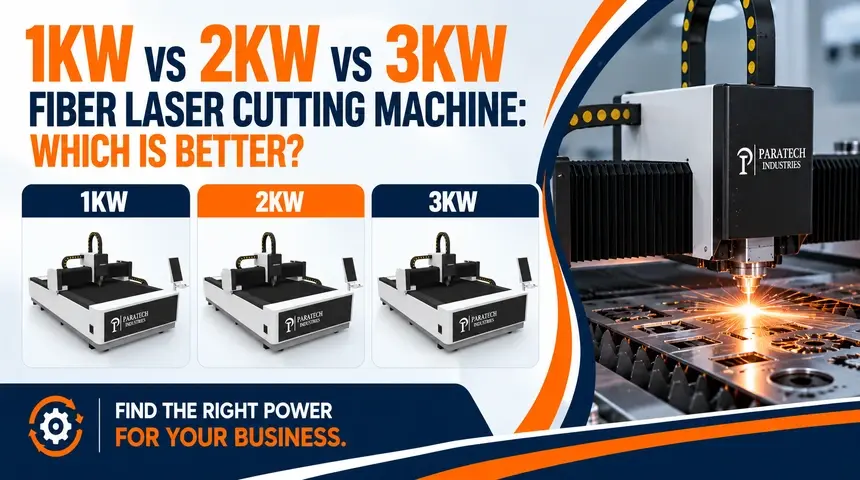
Introduction
Choosing between a 1KW, 2KW, and 3KW fiber laser cutting machine is an important decision for businesses involved in sheet metal fabrication, industrial manufacturing, and engineering. Each power level offers different capabilities, and the right choice depends on the type of metal you cut, material thickness, required cutting speed, production volume, and budget.
A 1KW fiber laser cutting machine may be suitable for businesses processing thinner metal sheets and handling general fabrication work. A 2KW machine can offer additional flexibility for varied cutting requirements, while a 3KW machine may be a better fit for businesses seeking higher throughput or processing thicker materials within the machine's capabilities.
However, higher laser power does not automatically mean better value for every business. The ideal machine is one that meets your production requirements without unnecessary investment in capacity you may rarely use.
Paratech Industries offers fiber laser cutting machine configurations ranging from 500W to 5KW, including 1KW, 2KW, and 3KW options. You can review the available configurations on the Fiber Laser Cutting Machine product page.
Understanding 1KW, 2KW, and 3KW Fiber Laser Cutting Machines
A fiber laser cutting machine uses a focused laser beam to cut compatible metal materials. Laser power influences the energy delivered to the material and can affect cutting speed, achievable thickness, and processing performance. However, actual results also depend on the material grade, cutting head, assist gas, machine condition, and cutting parameters.
A 1KW system can be a practical starting point for certain light-duty metal cutting applications. A 2KW system provides greater power capacity for businesses with a wider range of cutting jobs. A 3KW machine may be preferable when higher productivity or greater cutting capability is needed.
Before deciding, assess your most common materials and thicknesses rather than relying on the power rating alone.
1KW vs 2KW vs 3KW: Key Differences
| Feature | 1KW Fiber Laser | 2KW Fiber Laser | 3KW Fiber Laser |
|---|---|---|---|
| Initial investment | Generally lower | Generally moderate | Generally higher |
| Cutting capability | Suitable for selected thinner materials | Greater capacity for varied jobs | Greater capacity for demanding applications |
| Cutting speed | Suitable for appropriate light-duty work | Can improve throughput under suitable conditions | Can offer higher throughput under suitable conditions |
| Production suitability | Smaller or lighter workloads | Mixed production requirements | Higher-volume or more demanding workloads |
| Best selection factor | Budget and typical sheet thickness | Versatility and workload | Productivity and cutting requirements |
These are general comparisons, not guaranteed performance specifications. Exact cutting speeds, maximum thicknesses, and production costs should be confirmed with the manufacturer for the specific machine and material.
1KW Fiber Laser Cutting Machine: Is It Enough?
A 1KW fiber laser cutting machine can be a suitable option for small and medium-sized fabrication businesses that primarily process thinner metal sheets and have moderate production requirements. It can be used for selected applications involving stainless steel, mild steel, and other compatible metals, depending on the machine configuration and cutting parameters. One of its main advantages is the potential for a lower initial investment compared with higher-power alternatives. Businesses with predictable workloads may find that a 1KW system meets their needs without paying for additional capacity they rarely use. However, it may not be the best choice for businesses that frequently process thicker metal sheets or require high production speeds. Before purchasing, request a cutting demonstration using your actual material and thickness to confirm that the machine meets your requirements.
2KW Fiber Laser Cutting Machine: A Balanced Option
A 2KW fiber laser cutting machine can be a practical choice for businesses that handle a variety of metal cutting jobs. Compared with a 1KW system, its additional power may support faster cutting and a wider range of material thicknesses under suitable operating conditions. This configuration may be worth considering for fabrication workshops, engineering companies, and manufacturers with growing production demands. It can offer a balance between initial investment, cutting capability, and production flexibility. However, the additional cost may not be justified if most jobs involve thin sheets and low production volumes. Evaluate your regular cutting requirements, expected workload, and future growth before deciding whether a 2KW machine offers sufficient value for your business.
3KW Fiber Laser Cutting Machine: For More Demanding Production
A 3KW fiber laser cutting machine may be suitable for businesses with higher production requirements or applications that benefit from increased cutting power. Under appropriate conditions, it can support faster processing and a wider range of cutting applications than lower-power systems. This configuration may appeal to industrial manufacturers, established metal fabrication companies, and businesses handling regular production orders with demanding turnaround times. However, a higher-power machine generally requires a larger initial investment, and its performance depends on material type, thickness, assist gas, cutting parameters, and machine configuration. Before investing, compare cutting samples, operating costs, and expected production output to determine whether the additional capacity will improve productivity enough to justify the expense.
Which Materials Can These Machines Cut?
Fiber laser cutting machines are commonly used for compatible metals such as stainless steel, mild steel, aluminium, brass, and copper. However, material compatibility and cutting capacity depend on the machine configuration and operating parameters.
The thickness that can be cut effectively is not determined by laser power alone. Material grade, assist gas, cutting head, nozzle, and required edge quality also influence the result. Buyers should request verified cutting specifications rather than relying on general power-based assumptions.
For more information about available machine configurations and compatible applications, visit Paratech Industries' Fiber Laser Cutting Machine page.
If your business also works with non-metallic materials such as acrylic or wood, compare the applications of a CO₂ Laser Cutting Machine before choosing your equipment. The best technology depends on the material and the intended processing method.
Cutting Speed and Productivity: Does Higher Power Make a Difference?
Laser power can have a significant effect on cutting speed, particularly when comparing machines processing the same material and thickness under appropriate conditions. A higher-power system may complete certain jobs faster, helping businesses increase throughput and meet demanding production schedules.
However, overall productivity depends on more than the laser source. Loading and unloading time, sheet layout, part complexity, machine movement, operator efficiency, and the number of jobs completed per shift all contribute to output.
For example, a 3KW machine may offer limited practical benefit to a business that spends most of its production time loading materials or processing simple, thin-sheet jobs. Conversely, a manufacturer cutting metal continuously may benefit from the additional cutting capacity.
The best approach is to compare actual cutting samples, cycle times, edge quality, and expected production output for your regular jobs.
Operating Costs: 1KW vs 2KW vs 3KW
The initial purchase price is only one part of the cost of owning a fiber laser cutting machine. Businesses should also consider electricity consumption, assist gases, protective lenses, nozzles, maintenance, replacement parts, and technical support.
Higher-power machines may require more electrical capacity or different operating resources, depending on the configuration. However, the total operating cost per part can sometimes be lower if faster processing increases output and reduces production time.
Before purchasing, ask the supplier for a detailed quotation and clarify the included equipment, electrical requirements, cooling system, installation, warranty, and maintenance arrangements. Calculate costs based on your expected workload rather than comparing laser power alone.
If price is a key consideration, read our guide to the Fiber Laser Cutting Machine Price in India, where you can explore the product range and enquire about available configurations.
How to Choose the Right Laser Power for Your Business
Start by listing the materials you process most frequently, their thicknesses, the dimensions of your sheets, and the number of parts you need to produce each day. This information will help you determine whether a 1KW, 2KW, or 3KW machine is appropriate for your workload.
Next, consider your future production requirements. If you expect demand to increase, investing in a higher-power configuration may be worthwhile. However, avoid paying for capacity that is unlikely to be used.
Request a cutting demonstration using your actual material and required thickness. Compare cutting speed, edge quality, consistency, and overall cycle time. Also evaluate the machine's working area, control system, cutting head, component specifications, warranty, and after-sales support.
For businesses that need permanent product identification rather than sheet metal cutting, Paratech Industries also offers Laser Marking Machine solutions. Cutting and marking serve different purposes, so selecting the appropriate machine type is essential.
Why Consider Paratech Industries?
Paratech Industries manufactures and supplies fiber laser cutting machines with published laser source options ranging from 500W to 5KW. Its product page lists 1KW, 2KW, and 3KW configurations, along with a 1500 × 3000 mm working area and components such as a Cypcut control system and Raytools laser head. Confirm the specifications and options available for your required configuration directly with the company.
When enquiring, share your material type, thickness, sheet dimensions, production volume, and budget. These details help the team assess which machine configuration is suitable for your application.
Explore the Paratech Industries Fiber Laser Cutting Machine product page to review specifications and request a quotation.
Conclusion
The choice between a 1KW, 2KW, and 3KW fiber laser cutting machine depends on your production requirements, material thickness, expected throughput, and available budget.
A 1KW machine may be sufficient for selected thin-sheet applications and moderate workloads. A 2KW machine can offer additional flexibility for businesses handling varied jobs, while a 3KW machine may be more suitable for demanding production requirements where its additional capacity can be used effectively.
Rather than choosing solely by laser power, compare verified cutting performance, total ownership costs, and after-sales support. Contact Paratech Industries to discuss your requirements and identify the right fiber laser cutting machine for your business.
FAQs
What is the difference between 1KW, 2KW, and 3KW fiber laser cutting machines?
The main difference is laser power, which can affect cutting speed, material thickness, and production capacity.
Which fiber laser cutting machine is best for small businesses?
A 1KW machine may suit businesses with moderate workloads and thinner metal sheets, depending on their requirements.
Is a 2KW fiber laser cutting machine better than a 1KW machine?
A 2KW machine may offer greater cutting capability and productivity, but suitability depends on the materials and workload.
Is a 3KW fiber laser cutting machine suitable for industrial use?
Yes, it may suit demanding industrial applications where higher cutting capacity and production throughput are required.
How do I choose the right fiber laser cutting machine?
Compare your material types, sheet thicknesses, production volume, budget, operating costs, and after-sales support before purchasing.