
7 Industries That Benefit Most from Laser Welding Machines
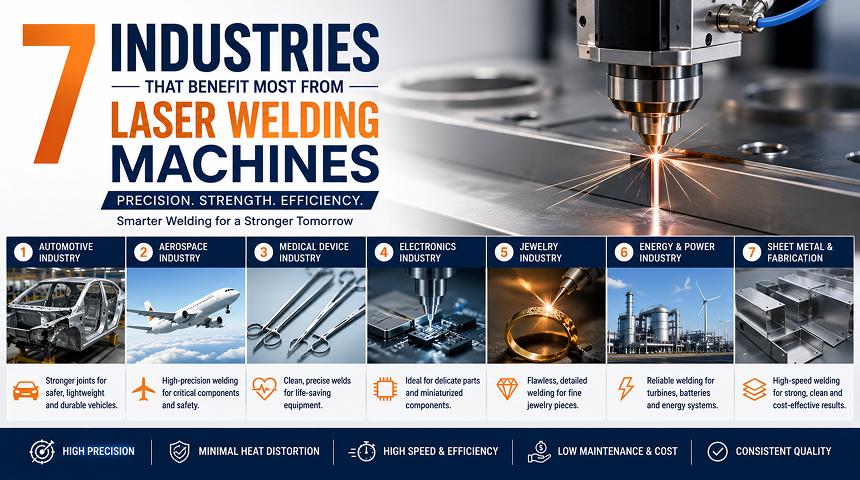
Manufacturers today are under constant pressure to improve productivity, reduce production costs, and maintain high-quality standards. Traditional welding methods often struggle to meet the precision and efficiency requirements of modern industries. This is why laser welding machines have become an increasingly popular solution across multiple sectors.
Laser welding technology provides precise, strong, and aesthetically clean welds while minimizing heat distortion and material waste. As industries continue to adopt advanced manufacturing practices, laser welding machines are playing a critical role in improving production processes.
What Is a Laser Welding Machine?
A laser welding machine uses a concentrated laser beam to join metal components with exceptional accuracy. The laser generates a focused heat source that creates strong welds while affecting only a small area of the material.
Compared to conventional welding methods, laser welding offers:
- Higher precision
- Faster welding speeds
- Minimal distortion
- Stronger weld quality
- Reduced post-processing
- Improved automation capabilities
These advantages make laser welding ideal for industries that demand consistency, accuracy, and high production efficiency.
1. Automotive Manufacturing
The automotive industry was one of the earliest adopters of laser welding technology. Manufacturers use laser welding machines for:
- Vehicle body assembly
- Exhaust systems
- Battery components
- Engine parts
- Structural components
Laser welding enables high-speed production while maintaining strict quality standards. The technology also supports lightweight vehicle designs by allowing precise welding of thin materials. Many manufacturers combine laser welding with fiber laser marking machines to improve component traceability and quality control.
2. Metal Fabrication Industry
Metal fabrication companies rely on laser welding to improve production efficiency and product quality.
Common applications include:
- Stainless steel fabrication
- Sheet metal welding
- Industrial equipment manufacturing
- Structural metal components
The ability to create clean welds with minimal finishing work helps fabricators reduce labor costs and increase throughput. Laser welding is often integrated with CO2 laser cutting machines to create a streamlined fabrication workflow.
3. Jewelry Manufacturing
Jewelry manufacturers require extreme precision when working with valuable materials such as:
- Gold
- Silver
- Platinum
- Titanium
Laser welding machines allow jewelers to repair, resize, and assemble intricate pieces without damaging surrounding areas.
Benefits include:
- Precise weld placement
- Minimal material loss
- Better aesthetic results
- Reduced polishing requirements
This makes laser welding a preferred technology in modern jewelry production, particularly when working with delicate and high-value materials.
4. Medical Device Manufacturing
Medical devices often contain small, delicate components that require precise welding.
Laser welding is commonly used for:
- Surgical instruments
- Medical implants
- Diagnostic equipment
- Stainless steel medical components
The process creates clean and contamination-free welds, helping manufacturers meet strict regulatory standards and quality requirements.
5. Electronics Industry
Electronic products continue to become smaller and more complex. Laser welding machines are ideal for joining:
- Battery components
- Electronic housings
- Connectors
- Sensors
- Precision assemblies
The controlled heat input helps protect sensitive electronic components from damage during production. Combined with online laser marking machines, manufacturers can also apply permanent identification and traceability information during assembly.
6. Aerospace Industry
The aerospace sector demands exceptional reliability and precision. Laser welding supports the manufacturing of:
- Aircraft structural components
- Turbine parts
- Fuel system components
- Aerospace assemblies
The technology helps produce lightweight yet strong components while maintaining stringent quality requirements and regulatory compliance.
7. Tool and Die Manufacturing
Tool manufacturers use laser welding for:
- Mold repair
- Die restoration
- Tool maintenance
- Precision component fabrication
Instead of replacing expensive tooling, manufacturers can repair damaged areas using laser welding technology, reducing costs and minimizing downtime.
Why Industries Are Switching to Laser Welding
Higher Productivity
Laser welding systems can significantly reduce production times compared to traditional welding methods, allowing manufacturers to increase output without compromising quality.
Better Weld Quality
The focused laser beam creates strong, consistent welds with excellent appearance and minimal defects, reducing the need for rework.
Reduced Material Distortion
The localized heat zone minimizes warping and distortion, which is especially important for precision-engineered components.
Lower Operating Costs
Although the initial investment may be higher, reduced labor requirements, faster production, and lower rework costs often result in a strong return on investment over time.
Choosing the Right Laser Welding Machine
Before investing in a laser welding system, businesses should consider:
- Material type
- Material thickness
- Production volume
- Automation requirements
- Future expansion plans
Selecting the right machine ensures optimal performance, operational efficiency, and long-term value. Manufacturers should also evaluate compatibility with other technologies such as laser marking systems and automated production equipment.
Conclusion
Laser welding machines have transformed manufacturing by delivering precise, efficient, and reliable welding solutions. Industries ranging from automotive and aerospace to jewelry and medical device manufacturing continue to adopt this technology to improve productivity and product quality.
As manufacturing standards become more demanding, laser welding technology will remain a key driver of innovation and operational excellence across industrial sectors. Businesses that invest in advanced laser solutions can gain a competitive advantage through higher efficiency, lower operating costs, and superior product quality.