
Fiber Laser Cutting Machine vs CO₂ Laser Cutting Machine: Which Is Better?
Introduction
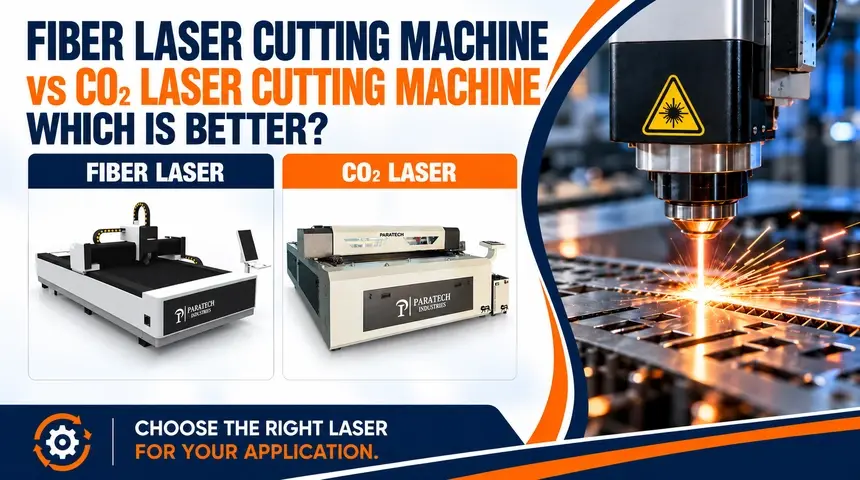
Choosing between a fiber laser cutting machine and a CO₂ laser cutting machine depends on the materials you work with, your production requirements, and your budget. Both technologies have useful industrial applications, but they are designed for different cutting needs.
For businesses that primarily cut metal sheets and components, fiber laser technology is generally the stronger choice. For businesses processing acrylic, wood, leather, fabric, and other compatible non-metallic materials, CO₂ laser technology is often more suitable. The right decision starts with understanding your application.
What Is a Fiber Laser Cutting Machine?
A fiber laser cutting machine generates a laser beam using an optical fiber laser source. The beam is delivered to the cutting head through a fiber-optic system, allowing the machine to cut compatible metals with precision and efficiency.
Fiber laser machines are commonly used in metal fabrication, automotive manufacturing, engineering, electrical enclosure production, and industrial component manufacturing. Their performance depends on laser power, material type, thickness, cutting parameters, and machine configuration.
If your business primarily processes metal sheets or components, explore the Fiber Laser Cutting Machine to learn more about the available solution.
What Is a CO₂ Laser Cutting Machine?
A CO₂ laser cutting machine generates its laser beam using a gas mixture that includes carbon dioxide. The beam is directed through an optical path and focused onto the material to perform cutting or engraving.
CO₂ laser technology is widely used for processing compatible non-metallic materials, including acrylic, wood, leather, fabric, rubber, and certain plastics. It is commonly used in signage, decorative products, packaging, and other applications where non-metal cutting is required.
Businesses considering this technology can explore the CO₂ Laser Cutting Machine and confirm its supported materials and specifications for their intended application.
Fiber Laser vs CO₂ Laser: Key Differences
| Comparison Factor | Fiber Laser Cutting Machine | CO₂ Laser Cutting Machine |
|---|---|---|
| Best suited for | Metal cutting | Many non-metallic materials |
| Common materials | Mild steel, stainless steel, aluminium and compatible metals | Acrylic, wood, leather, fabric and compatible plastics |
| Metal cutting performance | Generally faster and more efficient on many sheet-metal applications | Generally less efficient for metal cutting |
| Non-metal cutting | Not suitable for many common non-metal cutting applications | Well suited to many compatible non-metals |
| Maintenance | Generally fewer beam-path components to maintain | May require mirror alignment and optical maintenance |
| Operating costs | Often lower for comparable metal-cutting workloads | Can be higher depending on the system and workload |
| Best applications | Industrial metal fabrication and component production | Signage, decorative products and non-metal processing |
Actual cutting speed, operating costs, and material compatibility vary with the machine's power, configuration, material thickness, and operating conditions.
Which Machine Cuts Metal Better?
For most businesses focused on cutting sheet metal, a fiber laser cutting machine is generally the better option. It is well suited to materials such as mild steel, stainless steel, and aluminium, with performance depending on the machine's specifications and cutting setup.
Fiber lasers can also process certain reflective metals when the equipment is designed for those materials. Buyers should confirm compatibility and follow the manufacturer's operating recommendations.
CO₂ laser machines can cut some metals when appropriately configured, but fiber technology is generally preferred for many modern metal fabrication applications because of its cutting efficiency and performance.
Which Machine Is Better for Non-Metal Materials?
A CO₂ laser cutting machine is usually the more suitable option for businesses working with materials such as acrylic, wood, leather, fabric, and compatible plastics. It can produce detailed cuts for signage, decorative products, displays, and other non-metal applications.
Fiber lasers are not a direct replacement for CO₂ systems when cutting many common non-metal materials. Material compatibility should always be checked before processing, as some materials may be unsuitable for laser cutting or may release hazardous fumes.
Cutting Speed and Productivity
Cutting speed affects how many components a business can produce during a shift. Fiber laser machines often provide a productivity advantage when cutting thin and medium-thickness metal sheets. This can be valuable for manufacturers handling repeat orders, detailed components, and high-volume fabrication work.
CO₂ machines can be productive for their intended applications, particularly when processing suitable non-metal materials. The best comparison is based on the actual material, thickness, required edge quality, and production volume rather than a general speed claim.
Before purchasing, ask the supplier to demonstrate both cutting quality and processing time on a sample of your own material.
Maintenance and Operating Costs
The initial purchase price is only one part of the cost of owning a laser cutting machine. Electricity use, consumables, servicing, operator training, downtime, and replacement parts all affect the total cost over time.
Fiber laser systems generally have fewer beam-delivery optics that require routine alignment than conventional CO₂ systems. CO₂ machines may need additional optical maintenance, including mirror alignment and cleaning, depending on their design.
However, maintenance costs vary by model and usage. Compare the manufacturer's service requirements, warranty, spare-parts availability, and estimated running costs before making a decision.
Which Machine Offers Better Value for Money?
The better investment is the machine that matches your main production requirements and delivers consistent results at a manageable operating cost.
A fiber laser machine may offer better long-term value for a metal fabrication business that needs speed, precision, and regular metal cutting. A CO₂ machine may be the more practical investment for a business that primarily processes acrylic, wood, fabric, or other compatible non-metal materials.
Instead of comparing purchase prices alone, consider expected production volume, material waste, maintenance, energy consumption, and the cost of downtime. Request a quotation based on your specific application to make a more informed comparison.
Which Laser Cutting Machine Should You Choose?
Use these guidelines to identify the technology that best matches your business.
- Choose a fiber laser cutting machine if your main work involves metal sheets, metal components, or industrial fabrication.
- Choose a CO₂ laser cutting machine if you primarily cut compatible non-metal materials such as acrylic, wood, leather, or fabric.
- Compare both options carefully if you process different materials or have specialised cutting requirements. Confirm that the selected machine can safely and effectively handle your materials.
Paratech Industries offers both options for businesses evaluating laser cutting equipment. Review the Fiber Laser Cutting Machine and CO₂ Laser Cutting Machine product pages to compare the available solutions.
Conclusion
There is no single laser cutting machine that is best for every business. Fiber laser cutting machines are generally better suited to industrial metal cutting, while CO₂ laser cutting machines are often the preferred choice for compatible non-metal materials. Evaluate your material requirements, production volume, machine specifications, and long-term operating costs before investing. Visit Paratech Industries to explore laser cutting solutions for your business.
FAQs
Which is better, a fiber laser or a CO₂ laser cutting machine?
A fiber laser cutting machine is generally better for metal fabrication, while a CO₂ laser cutting machine is often better for non-metal materials such as acrylic, wood, and leather. The right choice depends on your application.
Can a fiber laser cutting machine cut stainless steel?
Yes. Fiber laser cutting machines can cut stainless steel when the machine has suitable power and configuration. The achievable thickness and cutting quality depend on the equipment and operating parameters.
Can a CO₂ laser cutting machine cut metal?
Some CO₂ laser systems can cut certain metals, depending on their power and configuration. However, fiber laser technology is generally preferred for many modern industrial metal-cutting applications.
Which laser cutting machine requires less maintenance?
Fiber laser machines generally require less maintenance of the beam-delivery system because they avoid the mirror-based optical path used in conventional CO₂ machines. Actual maintenance needs depend on the machine design, usage, and service requirements.
What should I consider before buying a laser cutting machine?
Consider the materials you process, material thickness, cutting accuracy, production volume, laser power, purchase price, energy consumption, maintenance requirements, warranty, and after-sales support. Request a cutting demonstration using your actual material before making a final decision.