
How Laser Technology Helps Manufacturers Reduce Production Costs
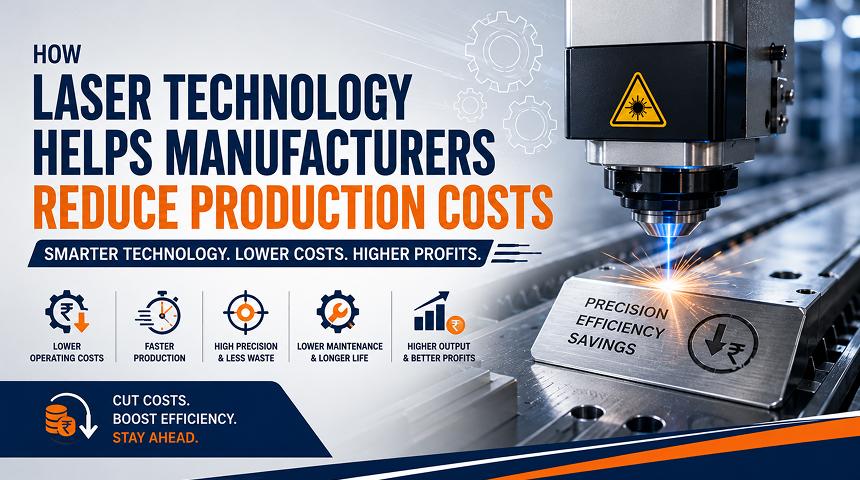
Manufacturers today face constant pressure to reduce costs while maintaining high product quality and meeting customer expectations. Rising labor expenses, increasing material costs, and growing competition make operational efficiency more important than ever.
One technology that continues to help manufacturers achieve these goals is laser technology. From fiber laser marking machines and laser engraving to fiber laser cutting machines and laser welding machines, modern laser systems streamline production processes, reduce waste, and improve overall efficiency.
This article explores how laser technology helps manufacturers lower production costs and create a more competitive manufacturing operation.
Understanding Manufacturing Costs
Production costs generally fall into several categories:
- Labor costs
- Material costs
- Maintenance expenses
- Energy consumption
- Rework and quality control costs
- Production downtime
Reducing costs in these areas can significantly improve profitability.
Reduced Material Waste
One of the biggest advantages of laser technology is precision.
Traditional manufacturing methods often result in excess material waste due to inaccurate cuts or human error.
Laser systems provide:
- Precise cutting paths
- Accurate engraving
- Controlled welding
- Consistent marking
This precision minimizes scrap material and maximizes raw material utilization. Learn more about advanced laser technology solutions for modern manufacturing.
Lower Labor Requirements
Laser systems automate many production tasks that previously required manual intervention.
Benefits include:
- Faster operation
- Reduced human error
- Fewer manual processes
- Higher production output
As automation increases, manufacturers can optimize workforce allocation and improve productivity.
Reduced Rework and Defects
Production errors can be expensive.
Defective products often require:
- Rework
- Additional labor
- Replacement materials
- Delayed deliveries
Laser technology produces highly consistent results, reducing the likelihood of defects and improving overall product quality.
Faster Production Cycles
Speed directly affects profitability.
Laser systems can process components significantly faster than many traditional methods.
Faster production enables manufacturers to:
- Meet tight deadlines
- Increase production capacity
- Handle larger orders
- Improve customer satisfaction
Minimal Maintenance Costs
Traditional machining tools wear down over time and require regular replacement.
Laser systems have fewer consumable components and often require less maintenance.
Advantages include:
- Reduced maintenance downtime
- Lower replacement costs
- Longer equipment lifespan
- Improved production continuity
Improved Product Traceability
Laser marking systems create permanent markings such as:
- QR codes
- Serial numbers
- Barcodes
- Product identifiers
Better traceability helps manufacturers quickly identify production issues and reduce costly recalls.
Energy Efficiency Benefits
Modern laser systems are designed for energy efficiency.
Compared to some conventional manufacturing processes, laser technology can reduce overall energy consumption while maintaining high production speeds.
Supporting Automation Initiatives
Manufacturers are increasingly adopting Industry 4.0 strategies.
Laser systems can integrate with:
- Automated production lines
- Robotics
- ERP systems
- Manufacturing execution systems (MES)
This integration improves operational efficiency and reduces overall manufacturing costs.
Industries Benefiting from Cost Reduction
Laser technology delivers measurable savings across industries including:
- Automotive manufacturing
- Electronics
- Medical devices
- Aerospace
- Jewelry manufacturing
- Industrial fabrication
- Consumer products
Long-Term Return on Investment
Although laser equipment requires an initial investment, many manufacturers achieve strong ROI through:
- Reduced labor costs
- Lower material waste
- Increased production speed
- Better product quality
- Reduced maintenance expenses
These savings accumulate over the lifespan of the equipment. Explore the complete range of industrial laser solutions available for modern manufacturing businesses.
Conclusion
Reducing production costs is essential for maintaining competitiveness in modern manufacturing. Laser technology helps businesses achieve this goal through improved precision, faster production, reduced waste, lower maintenance requirements, and enhanced automation.
As manufacturing continues to evolve, companies that invest in advanced laser technology solutions are better positioned to improve efficiency, increase profitability, and deliver consistent product quality.
Frequently Asked Questions (FAQs)
How does laser technology reduce manufacturing costs?
Laser technology reduces costs through automation, improved precision, reduced waste, lower maintenance requirements, and faster production speeds.
Is laser technology suitable for small manufacturers?
Yes. Modern laser systems are available for businesses of all sizes and can significantly improve productivity and profitability.
What industries use laser technology?
Industries including automotive, aerospace, electronics, medical devices, jewelry manufacturing, and metal fabrication commonly use laser technology.
Does laser cutting reduce material waste?
Yes. Laser cutting machines provide highly accurate cuts that maximize material utilization and minimize scrap.
Is laser technology a good long-term investment?
For many manufacturers, laser technology provides strong long-term returns through improved efficiency, reduced costs, and increased production capacity.