
Why Fiber Laser Cutting Machines Are Essential for Modern Sheet Metal Fabrication
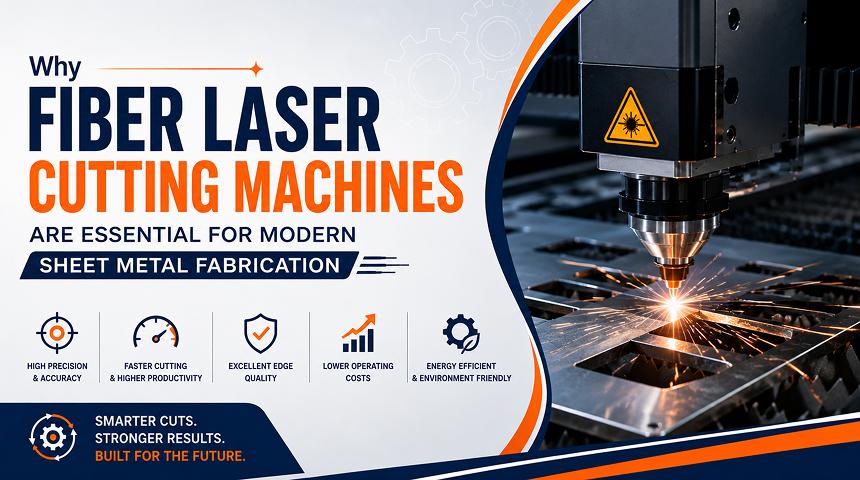
Sheet metal fabrication is the backbone of many industries, including automotive, electrical equipment, industrial machinery, construction, aerospace, and engineering manufacturing. As customer demands continue to evolve, manufacturers are under pressure to deliver high-quality components faster, more accurately, and at lower costs.
Traditional cutting methods often struggle to meet modern production requirements. This is why fiber laser cutting machines have become one of the most important technologies in today's fabrication industry. Their ability to produce precise cuts, reduce material waste, and increase production speed makes them a valuable investment for manufacturers seeking long-term growth and operational efficiency.
Fiber laser cutting technology is widely used for precision metal cutting and industrial fabrication applications, helping businesses improve productivity while maintaining exceptional quality standards.
What Is a Fiber Laser Cutting Machine?
A fiber laser cutting machine uses a high-powered laser beam generated through fiber laser technology to cut various metal materials with exceptional accuracy.
The laser beam is focused onto the workpiece surface, generating intense energy that melts or vaporizes the material while producing clean, smooth edges. Fiber lasers are particularly effective for processing reflective metals and achieving high cutting speeds with excellent efficiency.
Why Sheet Metal Fabricators Are Switching to Fiber Laser Technology
Manufacturers are increasingly replacing conventional cutting equipment with fiber laser systems because they offer significant operational advantages.
Key benefits include:
- Faster production cycles
- Higher cutting accuracy
- Reduced material waste
- Lower maintenance requirements
- Better energy efficiency
- Improved product quality
These advantages directly impact profitability, operational efficiency, and competitiveness.
Exceptional Cutting Precision
Precision is critical in sheet metal fabrication. Many fabricated components must meet strict dimensional tolerances to ensure proper assembly and performance.
Fiber laser cutting machines provide:
- Accurate cutting paths
- Consistent edge quality
- Minimal burr formation
- Reduced distortion
This precision reduces the need for secondary finishing operations and improves overall product quality.
Faster Production Speeds
Production speed plays a major role in manufacturing efficiency. Fiber laser systems can process materials much faster than many traditional cutting methods, helping manufacturers:
- Increase throughput
- Meet tight deadlines
- Improve machine utilization
- Handle larger production volumes
Faster processing enables businesses to take on more projects without increasing operational complexity.
Reduced Material Waste
Material costs represent a significant portion of fabrication expenses. Fiber laser cutting machines help maximize material utilization through highly accurate cutting paths and optimized nesting strategies.
Benefits include:
- Lower scrap rates
- Better sheet utilization
- Reduced raw material costs
- Improved profitability
Over time, these savings can have a substantial impact on manufacturing margins.
Superior Edge Quality
Clean edge quality is essential for many fabrication applications. Fiber laser cutting produces:
- Smooth edges
- Minimal heat-affected zones
- Reduced post-processing requirements
- Improved component appearance
This helps manufacturers maintain high quality standards while reducing finishing costs.
Processing a Wide Range of Metals
One of the reasons fiber laser technology has become so popular is its versatility.
Fiber laser cutting machines can process:
- Mild steel
- Stainless steel
- Aluminum
- Brass
- Copper
- Carbon steel
Their ability to handle reflective materials efficiently makes them particularly valuable for modern fabrication facilities. Fiber laser systems are known for processing reflective metals such as copper and brass effectively while maintaining high productivity.
Improved Energy Efficiency
Manufacturers are increasingly focused on reducing energy consumption and operating costs.
Compared to older laser technologies, fiber lasers offer:
- Higher electrical efficiency
- Lower power consumption
- Reduced operating expenses
- Better environmental performance
Greater efficiency contributes to lower long-term production costs and improved sustainability.
Lower Maintenance Requirements
Maintenance costs can significantly affect equipment profitability. Fiber laser cutting machines require fewer maintenance interventions because they contain fewer components that require regular adjustment or replacement.
Advantages include:
- Reduced downtime
- Lower service costs
- Improved machine availability
- Longer operational life
This helps manufacturers maximize equipment productivity while minimizing operational disruptions.
Supporting High-Mix Manufacturing
Modern fabrication shops often produce a wide variety of components in different quantities. Fiber laser cutting machines support flexible manufacturing by enabling quick transitions between jobs without extensive tooling changes.
This allows businesses to efficiently handle:
- Custom fabrication projects
- Small production runs
- Prototype development
- High-volume manufacturing
Flexibility is becoming increasingly important in today's manufacturing environment.
Integration with Smart Manufacturing
As Industry 4.0 adoption continues to grow, fiber laser cutting systems are becoming increasingly connected.
Modern systems can integrate with:
- ERP software
- Production management systems
- Material handling equipment
- Automated loading systems
- Real-time monitoring platforms
These capabilities improve operational visibility, production control, and manufacturing efficiency.
Industries That Benefit from Fiber Laser Cutting
Automotive Industry
Precision cutting of brackets, panels, structural components, and automotive assemblies.
Electrical Equipment Manufacturing
Production of enclosures, cabinets, switchgear components, and control panels.
Industrial Machinery
Fabrication of machine parts, frames, housings, and structural components.
Construction and Architecture
Processing metal sheets for building structures, decorative applications, and architectural projects.
Engineering and Fabrication Workshops
Custom component manufacturing and contract fabrication services across various industries.
Understanding Return on Investment
Investing in advanced manufacturing equipment requires careful evaluation. Fiber laser cutting machines generate ROI through:
- Reduced material waste
- Faster production cycles
- Lower labor costs
- Improved product quality
- Reduced maintenance expenses
- Increased production capacity
Many manufacturers recover their investment through operational savings and increased business opportunities.
Choosing the Right Fiber Laser Cutting Machine
Selecting the right machine depends on several factors:
- Material thickness requirements
- Production volume
- Available floor space
- Automation requirements
- Future growth plans
Evaluating these factors helps manufacturers choose equipment that supports both current and future production needs.
Why Fiber Laser Technology Is the Future of Fabrication
Manufacturing trends continue to move toward greater automation, higher precision, and improved efficiency.
Fiber laser cutting technology aligns perfectly with these goals by providing:
- High-speed processing
- Superior quality
- Cost-effective operation
- Smart manufacturing compatibility
Many manufacturers also integrate fiber laser cutting systems with fiber laser marking machines and laser welding machines to create fully optimized production environments.
As fabrication demands continue to increase, fiber laser systems will remain a key technology for modern manufacturing facilities.
Conclusion
Fiber laser cutting machines have transformed sheet metal fabrication by providing exceptional precision, faster production speeds, improved material utilization, and lower operating costs. Their ability to process a wide range of metals while maintaining consistent quality makes them an essential tool for modern manufacturers.
Businesses that invest in fiber laser cutting technology can improve productivity, enhance product quality, reduce waste, and strengthen their competitive position in an increasingly demanding manufacturing landscape. Fiber laser systems are widely recognized for combining productivity, precision, efficiency, and long-term operational value in industrial metal processing.
Frequently Asked Questions
1. What materials can a fiber laser cutting machine cut?
Fiber laser cutting machines can process stainless steel, mild steel, aluminum, brass, copper, carbon steel, and various other metal materials.
2. Why are fiber laser cutting machines more efficient?
They offer higher energy efficiency, faster cutting speeds, and lower maintenance requirements compared to many traditional cutting technologies.
3. How do fiber laser cutting machines reduce material waste?
Their high precision and optimized cutting paths improve material utilization and minimize scrap generation.
4. Which industries use fiber laser cutting machines?
Industries such as automotive, electrical equipment, aerospace, industrial machinery, construction, and metal fabrication commonly use fiber laser cutting technology.
5. Do fiber laser cutting machines require frequent maintenance?
No. Fiber laser systems generally require less maintenance due to their simplified design and reliable operating components.
6. How does fiber laser cutting improve product quality?
It provides precise cuts, smooth edges, minimal distortion, and consistent results, reducing the need for additional finishing processes.