
Why Permanent Laser Marking Is Replacing Traditional Product Labeling
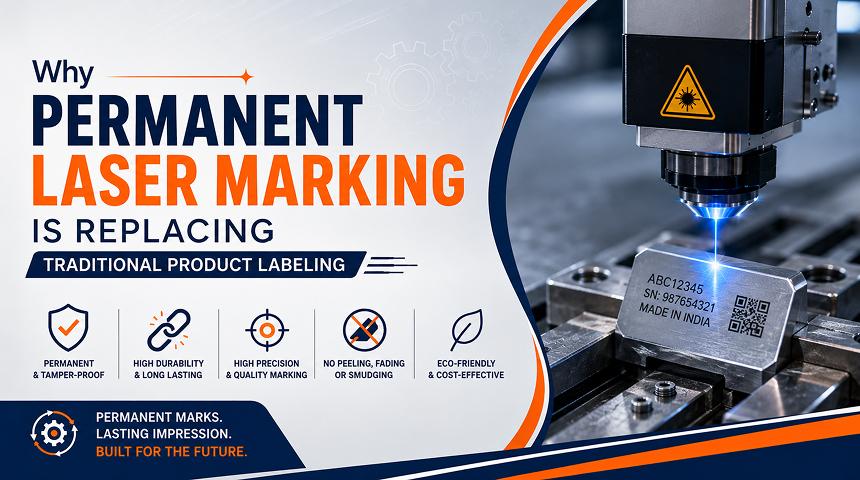
Product identification is essential for manufacturing, quality control, inventory management, and regulatory compliance. For decades, manufacturers relied on labels, stickers, stamps, and ink-based printing systems to mark products.
However, these traditional methods often struggle to meet modern requirements for durability, traceability, and long-term reliability. As a result, more manufacturers are adopting permanent laser marking technology as a superior alternative.
The Limitations of Traditional Labeling Methods
Traditional product labeling methods face several challenges that can impact product quality, traceability, and compliance.
Common issues include:
- Labels peeling off
- Ink fading over time
- Damage from chemicals
- Moisture exposure
- Abrasion and wear
- Counterfeiting risks
These problems can compromise product identification and create challenges throughout the supply chain.
What Is Permanent Laser Marking?
Laser marking uses focused laser beams to create permanent markings directly on a product's surface. Unlike labels or ink printing, laser markings become part of the material itself, making them highly durable and resistant to environmental factors.
Common marking applications include:
- Serial numbers
- QR codes
- Barcodes
- Product information
- Manufacturing dates
- Company logos
Many manufacturers use Fiber Laser Marking Machines for high-speed and permanent marking on metal and industrial components.
Exceptional Durability
One of the biggest advantages of laser marking is its durability. Permanent markings remain readable even in demanding industrial environments where traditional labels may fail.
Laser markings resist:
- Heat
- Chemicals
- Corrosion
- Water exposure
- UV light
- Physical wear
This makes laser marking ideal for industries that require long-lasting product identification.
Improved Product Traceability
Manufacturers increasingly require complete product lifecycle traceability. Permanent laser marking supports traceability by ensuring identification data remains readable throughout a product's lifespan.
This enables:
- Batch tracking
- Quality control
- Warranty management
- Recall management
- Regulatory compliance
Many organizations combine laser marking with online laser marking machines to automate traceability processes across high-speed production lines.
Lower Long-Term Costs
While traditional labeling systems may appear less expensive initially, they often generate ongoing operational expenses that accumulate over time.
These costs include:
- Label materials
- Ink supplies
- Maintenance
- Replacements
- Production downtime
Laser marking systems eliminate many recurring consumable expenses, helping manufacturers reduce long-term operating costs while improving efficiency.
Enhanced Product Security
Counterfeit products remain a significant challenge across many industries. Laser marking improves product security through permanent and tamper-resistant identification methods.
Security benefits include:
- Permanent identification
- Unique serial numbers
- QR code authentication
- Tamper-resistant markings
These features make products more difficult to replicate fraudulently and help manufacturers protect their brand reputation.
Environmentally Friendly Manufacturing
Sustainability has become a priority for many manufacturers. Laser marking supports environmental goals by reducing waste and eliminating consumable materials.
Laser marking helps eliminate:
- Adhesive labels
- Chemical inks
- Printing consumables
- Packaging waste
This contributes to cleaner, more sustainable manufacturing processes while supporting corporate environmental initiatives.
Industries Transitioning to Laser Marking
Industries increasingly adopting permanent laser marking include:
- Automotive
- Aerospace
- Electronics
- Medical devices
- Industrial equipment
- Consumer goods
- Metal fabrication
These sectors require long-lasting product identification that traditional labeling methods often cannot provide.
Regulatory Compliance Benefits
Many industries must comply with strict product identification and traceability regulations. Permanent laser marking helps businesses meet compliance requirements by providing:
- Consistent identification
- Long-term readability
- Product traceability
- Audit support
This simplifies compliance management while reducing operational risks and supporting quality assurance initiatives.
The Future of Product Identification
As manufacturing becomes more digital and traceability requirements continue to increase, permanent laser marking is expected to become the industry standard for product identification.
Manufacturers are increasingly integrating laser marking with advanced technologies such as laser welding systems, automation platforms, and Industry 4.0 production environments to improve operational performance.
Businesses adopting laser technology today are preparing for future regulatory requirements and evolving customer expectations.
Conclusion
Traditional labels and ink printing methods are increasingly unable to meet the durability, traceability, and compliance requirements of modern manufacturing.
Permanent laser marking technology provides a reliable, cost-effective, and future-ready solution for product identification. By replacing traditional labeling methods with laser technology, manufacturers can improve quality control, strengthen traceability, reduce costs, enhance security, and achieve greater operational efficiency.